Showing posts with label dave. Show all posts

Wednesday, May 26, 2021

Day 0998 - Django Django

Django Django “Django Django” (2012)


The group produced a single each year from 2009-2011 but took their time on releasing this, their debut full-length.

I was kind of interested in this one, having not even heard of this band, but with the book describing them as incorporating a multitude of styles in quite a cohesive way.  I also found it interesting (though not sure if this would directly influence their music) that the members hailed from Scotland, Ireland and Yorkshire in England.

From the opening intro track the mix of styles is born out with sounds like Morricone but with synthesizers and weightier percussion and then picks up some some 80s new-wavey flavoured vocals and synths with clean guitars.   It moves through ping-pong vocals and propulsive guitars in "Default" to a laidback 60s vibe of the bass, drums and acoustic guitar.

“Zumm Zumm” mixes folky vocal harmonies with jaunty fuzzy dance bass and almost 'world music' beats.

“Life is a Beach” almost has a kind of cheesy 60s beach movie sound to it but with 60s folk vocal harmonies and reasonably subtle melodic hints of middle-eastern and classical music.
"Skies Over Cairo" with its chanty Middle-Eastern-to-a-beat almost sounds like a poppier take on Mr Bungle's "Desert Search For Techno Allah" (high praise from a Bungle fan).   I feel like the Bungle guys would also appreciate album closer "Silver Rays" with its 60s surf-style production and Brian Wilson via the 80s sound that seems like a sunnier take on the sound of Mini Mansions.

My feel on it is that they've drawn from the previous 5 decades of music but with the lion's share of the sound coming from the 60s with 00s technology making it more contemporary.   I'd definitely be keen to check out more from these guys.

Wednesday, May 12, 2021

Day 0984 - It's Blitz

 Yeah Yeah Yeahs “It’s Blitz!” (2009)


Whereas the YYY’s debut “Fever to Tell” (day 950) leaned on a Riot Grrl-esque art punk approach; “It’s Blitz” takes things in more of a poppy, new-wave sound, which was presumably right in the wheel-house of their producer (and TV on the Radio member) Dave Sitek.   Nick Cave and the Bad Seeds’ producer Nick Launay was also in the mix (so to speak).

The new sound is obvious from the off, with first track “Zero”, opening with a pulsing synth-line.  More polished than ‘Fever to Tell’ but without becoming toothless in the process.

“Soft Shock” showcases a kind of propulsive, anthemic pop, while “Skeletons” has a dreamy pop sound.  There’s a nice alt-rock groove to “Dull Life” while “Runaway” is straight-up cinematic.

Impressive that they can shift gears from their original sound like this and come up with an album that is (to my tastes) even better than what they started with.

Friday, May 7, 2021

Day 0979 - Dear Science

TV on the Radio “Dear Science” (2008) – got it


I came to TV on the Radio via the project Nevermen featuring TVotR’s Tunde Adebimpe, rapper/producer Doseone and a favourite of mine Mike Patton.   When I heard about the project I decided to check out TVotR who I had been vaguely aware of (if only by name) for a while.

After a bit of youtubing I picked up their excellent full-length debut (if you don’t count the self-released “OK Calculator”, and it sounds like the band themselves don't count it much) “Desperate Youths, Bloodthirsty Babes”.  I’ve since collected all of their albums including this one.

While I found their second album “Return to Cookie Mountain” to be a bit of a muddy, messy affair audio-wise, “Dear Science” is crisp and catchy.   With the band being full of producers and multi-instrumentalists it would be easy enough for it to be a “too many cooks” situation, but they seem to find their way around it.

The album owes a debt to the 80s, without sounding derivative or ‘retro’.  It's more like the 80s is the starting point and then there are enough looped fuzzy beats, interesting production and other 00s touches to make this fully contemporary.

Opener “Halfway Home” is all glorious synths and soaring vocals, followed by “Crying” which has more than a hint of Bowie to it.   “Dancing Choose” is a favourite of mine with its pulsing beat, hand-claps and speedy vocals from Tunde.   "Golden Age" and “Red Dress” bring the funk.   “Lover’s Day” is Prince making sweet sweet love to Peter Gabriel while he does his thing.

The album nicely tows the line between melodic atmospheric pieces, and funky danceable grooves.


Sunday, January 24, 2021

Day 0876 - Follow the Leader

Korn "Follow the Leader" (1998) - got it


When I was in high school, Korn were a big deal.  They, along with a number of angry, shouty, down-tuned rock bands that made up the nu-metal scene seemed to be everywhere in the late 90s and early 00s.   

Even though it was supposed to be a movement of outsiders pushing against conformity by mashing up genres and kicking against 'the popular kids', the genre became trite, commercialised and obsessed with its own image.  Korn in particular made a thing of wearing ADIDAS and, when offered a shit-ton of money by Puma to wear their stuff instead, jumped ship.


After two albums of their growly, low-end focussed metal, Korn injected this album with a bit of variety in the shape of more of a lean into  the hip-hop side of their sound.  Guest spots by Ice Cube, the Pharcyde's Tre Hardson and (meh) Limp Bizkit's Fred Durst are featured.   This last collaboration is on the now definitely dated battle track where Jonathan Davis and Durst throw homophobic slurs at each other.

The album opens with a minute's silence made up of 12x 5 second tracks.   When I was at school there was a story going around that it was Korn demanding a minute's silence for themselves as the progenitors of the nu-metal genre, but apparently it's more humble and less cringeworthy than that.  The minute of silence was dedicated to a fan who died of cancer.  He had been able to meet the band as a dying wish.

The album is a tad overlong as are many of the songs, though "Children of the Korn" (with Ice Cube); single "Got the Life" with its disco beat and slap bass; and closer "My Gift to You" with it's slow, epic, bagpipe backed groove are still good, even now.

I enjoyed Korn at the time, haven't really revisited them much in the last few years.  It's not that I don't still like aggressive, loud rock, I just think that their particular brand of it sits best with you when you're adolescent, angry, and not thinking too hard.   

Wednesday, January 20, 2021

Day 0872 - Deserter's Songs

Mercury Rev "Deserter's Songs" (1998)

Another of those "I knew the band-name but not the music" situations.  Apparently this isn't necessarily the album to start on with this band as it was a bit of a departure from their previous albums.  It's baroque pop with a range of interesting rock and orchestral instrumentation (right up my alley).

The book makes comparisons to the Beach Boys, and while that is usually made as a lazy comparison to say they have nice vocal harmonies (I should know, I've used the reference myself at times), this is actually quite reminiscent of Brian Wilson's sonic experimentation in "Pet Sounds" and "Smile".   

Another comparison made was Neil Young Singing over Pink Floyd... true, vocalist Jonathan Donahue does have a similar voice to Young and the music does have a Floydish vibe in places.   I'd add a third reference to the pot, Flaming Lips.   Donahue's high, clean vocals over such progressive, swirling pop can't help but bare a resemblance to that other innovative art pop group.

Wednesday, December 16, 2020

Day 0837 - Blur

Blur “Blur” (1997) – got it

Blur’s self-titled album was a dramatic sea change for the band.  After three albums of perky, clean, cheeky Britpop, containing plenty of piano and occasional brass bands; they suddenly emerged with this murky, often downbeat, sparser, lo-fi rock album.

The band’s previous album “the Great Escape” had been relatively successful commercially and critically (and it’s the first one really got me into them).  But, with the highly publicised ‘battle of Britpop’ between Blur and Oasis and the success of the latter’s “(What’s the Story) Morning Glory” album Blur faced backlash, being seen as inauthentic middle-class pop, next to ‘working class heroes’ Oasis.

Guitarist Graham Coxon was also feeling increasingly creatively restrained within the band, to the extent that he wrote a letter to singer Damon Albarn urging that they make music that “scares people again”.   Albarn talked to producer Stephen Street about going for a more stripped down sound and the band took a more collaborative approach, jamming together instead of just working on Albarn's compositions.

Right from the off it's a different sound.  Opening track "Beetlebum" starts with muted, struck guitar strings giving way into an almost monotone fuzzy guitar line with Albarn's slow drawl creeping in over top; the overall effect owing more to American indie rock than to the British music hall.   The second track, the imaginatively titled "Song 2" was something they'd thrown together with Coxon and drummer Dave Rowntree playing drum kits at opposite ends of studio from each other and Albarn riffing lyrics over the top.  The short rocker ended up becoming a hit for the band.

Most of the rest of the record continues with its scungey alt-rock vibe on tracks like "Death of a party", "Movin' on", the Coxon penned and sung "You're so great" and epic closer "Essex Dogs".    Elsewhere, tracks like "MOR" and "Chinese Bombs" bring a rocking velocity to contrast the more lethargic numbers.   "On your own" flirts with electronic beats, and mixes that with guitar noises and singalong choruses.

The album doesn't completely depart from previous offerings.  As with the previous three albums there is an instrumental track, but instead of being a jaunty brass or piano piece, it's the moody "Theme from Retro", all organs and indistinct vocal samples.   The song that bears the most resemblance to their previous Britpop work (bouncy rhythm and string backing) is, funnily enough, the track titled "Look Inside America".

It's funny in a way: Oasis spent so much time trying to be the Beatles by copying that band's various sounds, whereas Blur ended up being more like the Beatles through their constant reinvention and deconstruction of their own sound.

Tuesday, October 27, 2020

Day 0786 - The Foo Fighters

The Foo Fighters "The Foo Fighters" (1995) - got it


Dave Grohl had been writing songs and recording demos during his time in Nirvana, having released the relatively varied demo "Pocketwatch" under the name 'Late'.   After Kurt Cobain's suicide, Grohl took his songs and really started to get things going.

Dave recorded this album entirely by himself and then slapped the name 'Foo Fighters' on it to make it seem less like a solo release.  The demo/album ended up garnering industry interest and Grohl was stuck with the name, which he later opined was the stupidest band name in history.

I quite like this album, the Foos hadn't yet fully found their identity as a dad-rock band  with output that (to my ears) moves between good albums, and mediocre (but occasionally listenable) albums.  This albums is kind of a poppier less abrasive take on the grunge sound that Grohl's other band were known for.    "Good Grief" almost sounds like new-wave filtered through punk, "Weenie Beenie" is one of the lo-fi shout-rock tracks Grohl would occasionally indulge in (e.g. "White Limo" and "the Color and the Shape").   Elsewhere there's the poppy 'Big Me', the jazzy "For all the Cows" and the washy, almost droney tracks "X-static" and "Exhausted".   

Good selection of rock tracks, and it's impressive that Grohl did the whole thing himself.

Friday, October 23, 2020

Day 0782 - MTV Unplugged in New York

Nirvana "MTV Unplugged in New York" (1994) - got it

 
The write-up in the book seems to express surprise at the idea that acoustic grunge could work... which is odd as Pearl Jam had already done a session for MTV's (at the time) popular unplugged segment a couple of years earlier.

Regardless, Nirvana were approached to do an unplugged show.  Their show was unconventional in that the band weren't just trotting out their hits on acoustic guitar.  In amongst a selection of Nirvana tracks were covers of songs by the Vaselines, David Bowie and 3 songs by the Meat Puppets.  Two members of the Meat Puppets joined the band on stage to play and Mark Lanegan was invited but declined, which lends credence to the suggestion that Kurt wanted to use Nirvana's celebrity to help gain exposure for his friends and artists he enjoyed.

The set closes with a bleeding-throated rendition of bluesman Lead Belly's take on the traditional track "Where did you sleep last night".   That seems an appropriate choice because the acoustic approach to Nirvana's sound mixed with Krist Novoselic's heavy bass gives everything a kind of heavy, rootsy blues sound.

Perhaps Kurt's voice had always been this raw, ragged (yet strong) and emotive, but recast without loud distorted guitars to hide behind, it is quite striking.

While the posthumous track "You know you're right" suggested that they probably would have continued with their loud-quiet-loud approach to songwriting, it's great that this album exists and it's nice to think that it could have led to a new direction for the band.

Monday, October 12, 2020

Day 0771 - Parklife

Blur “Parklife” (1994) – got it


Blur were feeling reinvigorated following the release of their second album “Modern Life is Rubbish”.  It hadn’t broken records with its sale figures, but was critically well received and the band felt they were on the right track.  As soon as they’d finished that record, singer Damon Albarn started writing a large number of songs and the band worked at demoing them.  They got back in the studio with producer Stephen Street as soon as they could, and most of the album was recorded fairly quickly.

Aside from the opening track “Girls and Boys” which has a bit of a European dance/disco vibe to it, and one or two of the more grand tracks like “To the End”, this album is British through and through.  In fact even "Girls and Boys starts" with a line about “following the herd to Greece on holiday”, sounding like the start of episode of “Boozed up Brits Abroad”.   

The Britishness continues with the “oi oi oi” punky rock of “Bank Holiday”, the brass band waltz of instrumental “the Debt Collector” (as well as brassy bass embellishments on the title track and rocking "Jubilee"), the pastoral harpsicord of “Clover over Dover” and of course Albarn’s almost aggressively cockney/mockney accent pushing into the songs.  Even bassist Alex James' composition "Far Out" sounds like it would be at home in a 1960s Pink Floyd club gig in swinging London.

It's a brilliant album (if maybe a track or so too long).  They do copy Modern Life a bit with the overall sound and having a couple of fun instrumental 'interludes', but with "Girls and Boys" and the loungey stylings of "To the end" they were definitely forging new ground.

Thursday, September 17, 2020

Day 0746 - Modern Life is Rubbish

 Blur “Modern Life is Rubbish” (1993) – got it


Blur had released their debut album “Leisure” which aligned itself stylistically with the ‘baggy’ scene, the musical movement mixing rock and dance rhythms.  The album fared well enough but things quickly went downhill.  The band came to be seen as bandwagon jumpers, they had an ill-received tour of the USA and found themselves owing quite a large sum of money, all while rival band Suede’s star was in ascension.

On the US tour, singer Damon Albarn had found himself missing the UK and listening to the pastoral, almost kitsch pop of the Kinks and formulating a bold change of direction for the next Blur album.  They all cut their hair and geared up in doc marten boots, narrow jeans and polo shirts to pose for photos under the label “British Image 1”.  The music followed suite with a more resolutely British bent to it.  Whether it was the brass band in “Sunday Sunday”, the London-centric lyrics of lead single “For Tomorrow” or Albarn's distinctive accent (labelled 'mockney' by his detractors) throughout.

It’s essentially the ‘classic’ Blur sound of upbeat pop songs with cheeky raucous vocals, lashings of backing vocals and embellished with brass bands and strings.  The clean pop doing battle with guitarist Graham Coxon’s love of noisy lo-fi indie rock and fuzzed-out distorted guitars.

But before you can get ideas about this album being all about Albarn and Coxon, the jagged bassline for “Colin Zeal” starts, with the drums and guitar coming in to create polyrythms against it, until it all congeals into the propulsive pop-rock chorus.

The band explore a range of sounds with "Miss America" being an interesting experiment in minimalism and atmosphere, that vaguely hints at Coxon's future work for "the End of the F**king World".  "Oily Water" almost bears a resemblance to what was going on in American indie-rock and "Advert" sounds like a blueprint for the faster tracks on their next two albums.

A lot of fans feel that “Modern Life…” is the best Blur album, others feel they perfected their sound with the next album “Parklife”.  My own heart lies with their murky, morose self-titled album, but I also like the fact that they don’t just settle on one sound and seem to be eternally questing for the next thing.

Sunday, September 13, 2020

Day 0742 - In Utero

 Nirvana “In Utero” (1993) – got it


In my teens I was moving from mostly listening to my parents’ music, to getting into louder, heavier stuff.  There were a few albums (on cassette back then) from my brother’s collection that were starting to inform that transition.  Amongst these were the Nirvana albums “Nevermind” and “In Utero”.

With “In Utero” Nirvana were in the unenviable position of trying to follow up an album that had been a huge smash-hit, had reignited mainstream interest in punk and had helped helm the grunge movement… so, no pressure.

The band looked to kick back against the polished sound of “Nevermind” by hiring ‘punk’ producer Steve Albini.  Albini had worked with the Pixies, of whom Kurt Cobain was a fan, so that probably fed into the decision.  

The band had told Albini that they wanted to make a raw and uncompromising album, and he obliged, but it seems as though, once the record company heard the rough mixes, the compromises started.  Albini refused the band's request to remix the album, leading to several tracks being given a polishing remix by R.E.M’s regular producer Scott Lit.

You can kind of hear the difference between the two approaches.  Single “Heart Shaped Box” has a clean drum sound and clear vocals, whereas something like noisy opener “Serve the Servants” still has its roomy, noisy ambience favoured by Albini.  The raw, heartfelt "All apologies" sounds like the best of both worlds, with clean melodic, string-backed verses and raucous, 'recorded-in-someone's-bathroom' distorted choruses.

All in all, I feel like the mix and compromise makes the album more interesting than uneven.   More interesting than either another completely polished, ‘clean’ sounding Nevermind-esque recording, or a completely dirty, punky Albini-style record.

In true 1990s rock style, the album closes with a period of silence followed by the then-popular secret hidden track.

Friday, July 31, 2020

Day 0698 - Ten

Pearl Jam "Ten" (1991) - got it


Pearl Jam rose (I'm not going to say "like a phoenix" because... trite) from the ashes of another band.  When the vocalist for Mother Love Bone died of an overdose, guitarist Stone Gossard started jamming with his friend Mike McCready who urged him to reconnect with his MLB bandmate bassist Jeff Ament.  They found young precocious vocalist Eddie Vedder through their friend (and ex-Red Hot Chili Peppers drummer) Jack Irons.

This album is considered one of the cornerstones of the grunge movement, a genre label that seemed to cover a range of sounds.  Nirvana were raging punk with a sense of melody, Soundgarden were sludgey Zeppelin-meets-Sabbath metal, slowly giving way to a more melodic mode, Pearl Jam started off with 'classic rock' riffs over funky mid-tempo rhythms and Vedder's growling voice.  I guess that they had in common a darker, grittier more cynical sound than some of the other artists that had been filling the rock charts at the time.

In some ways, it's odd that "Ten" is the album that a lot of people associate with the band.  It certainly is a good album, and it was commercially successful, but it doesn't feature feature either of their longest serving drummers Jack Irons or Matt Cameron, and the bulk of the songwriting is undertaken by Ament and Gossard, rather than the more even spread of input and large input from Vedder that would characterise later albums.  The album has much less variety than later releases, to the extent that "Even Flow" and "Why Go" have almost identical riffs, and Ament admitted that "Jeremy" was largely written around an E chord!

There are some great tracks though, with the heartfelt "Black", the raging "Porch", the meditative drone of "Release" and the anthemic "Alive". That last track was originally pitched by Vedder as the burden of being left behind when others die but over time has been taken by fans to be a life-affirming track.  The band have come around to that interpretation too.

Mention should be made of lead guitarist McCready, whose songwriting contributions are minimal on this album, but who is allowed pretty free-reign and sprays blistering blues lead all over the songs, including "Alive" which ends with an extended guitar solo.

I was quite late coming to Pearl Jam.  I have friends who were into them in the 90s.  I actually got into them (being serious for a moment, fam) when I was going through a  bout of depression.  I've often found something that can help push me out of that kind of funk is to listen to music that I'm unfamiliar with, or don't know that I really like it.  There were one or two PJ songs I liked and I was peripherally aware of one or two other things of theirs.  I dove in headfirst to their oeuvre and I've not regretted it at all.

Sunday, July 19, 2020

Day 0686 - Nevermind

Nirvana "Nevermind" (1991) - got it


One of those albums where so much has been said about it, every song has been picked over musically and lyrically like a day-old carcass in the Serengeti.

It was certainly an early discovery for me.  My brother had a copy on cassette, and while I wasn't really a fan of "loud music" at that point, this one had enough melody and I found Kurt's voice interesting enough that it won me over.  I listened to it quite a bit and rewinding it to listen again and again... then one day I was doubly rewarded when I actually bothered to turn the tape over and listen to the second side too!

It's an album (and band) of contrasts and contradictions.  From the loud/quiet/loud formula that the band specialised in, to Cobain wanting to revel in punk rock, even as he wrote snappy pop songs.  Producer Butch Vig takes the songs from close, tight intimate sounds to booming, stadium-ready thump, often within the same song (such as on ‘Drain You’).

Dave Grohl is now 'the nicest guy in rock' or 'an embarrassing twat' depending who you ask, but as a new addition to the band, he really helps anchor this album.  With his able backing vocals adding a little something extra to the mix, and of course his bombastic drumming.  A drummer friend of mine once pointed out that Grohl is a great songwriting drummer.  He doesn't play a million fills and hugely intricate parts, but what he plays locks into and complements the songs.  A lot of his parts for this album if you heard them in isolation you'd likely still be able to pick the song it came from.

The single “Smells Like Teen Spirit” launched the album, band and the newish ‘grunge’ genre into the commercial stratosphere. Arguably, here Cobain achieved his goal of mixing the Pixies, the Melvins and the Beatles, but his punk guilt was triggered by a feeling that the album was too polished and almost too successful.  More successful  than many of his influences (which is possibly one reason why he devoted a decent portion of Nirvana's high-profile MTV Unplugged show to covering other artists).    With the next studio album 'In Utero' he would try and bring a bit more noisy punky squalor to proceedings.

Saturday, July 11, 2020

Day 0678 - Ritual de lo Habitual

Jane's Addiction "Ritual de lo Habitual" (1990) - got it


The last album before the tumultuous Jane's broke up (for the first time). 

It really is "an album of two halves".  The first 5 tracks are more or less stand-alone rock songs, including the brilliant "Been caught stealing".  The last 4 songs take you on a journey, musically and emotionally with songs written for Farrell's mother who committed suicide, and his girlfriend who overdosed.  The songs are drawn out alternative rock epics with synthesisers, piano and strings on "Then she did..." which almost touches on Zeppelin's 'Kashmir' or "Stairway' in its scope and power.   That is followed by the brilliantly left-field middle-eastern flavoured "Of course" with heavily featured violin, plodding, elephantine percussion and Farrell's voice hitting new heights of nasal-ness.... nasality?

Saturday, July 4, 2020

Day 0671 - Rust in Peace

Megadeth "Rust in Peace" (1990)


Megadeth gonna Megadeth.

This is the fourth Megadeth album and features their third lineup, though apparently this one would stick for the next few albums.  As always with Megadeth, the album largely centres around Dave Mustaine, his riffs, his lead guitar, and his voice.  David Ellefson should be given his due though, being one of the most constant members of the band, and providing bass that ranges from nimble and virtuosic; and restrained and interesting.

This album gets held up as one of the highlights of the thrash movement, and I can buy that.  While I've always been more of a Metallica or Slayer fan, this album features some speedy riffs and (as the superlative goes) 'fretboard pyrotechnics' from Dave.  It has enough melody and intensity to it that it almost feels like it sits between thrash, and something more in the 'party-rock' vein like Guns n Roses.

I always felt like Mustaine took himself far too seriously though.  I never felt his music was quite as good as his old band, and he seemed to be stuck repeating what they were doing in their first couple of albums.  Mind you, some metal fans (though not all) appreciate a spot of creative inertia, so....

Thursday, May 28, 2020

Day 0634 - Nothing's Shocking

Jane's Addiction "Nothing's Shocking" (1988) - got it


Jane's have been compared to Led Zeppelin in the past, and I can kind of see it.  Unlike bands like Wolfmother or Greta Van Fleet who emulate Zeppelin like they're a covers band, Jane's channelled the same energy into an original sound.   Four members each with masterful control over their instrument.  Pounding drums, wailing high vocals, twiddly bass-lines and guitar that melds folky-acoustic, psychedelia, stadium rock and virtuoso soloing.

The songs have an energy and danger to them, dripping with sexuality and cynicism.  This is one of those albums that laid a lot of groundwork for the 90s alt-rock movement.  In fact it was bands like Jane's with their mix of stadium rock, psychedelic pop, funk, atmospheric rock etc. that led to the 'alt-rock' label to be coined... which must have frustrated them, as the whole point for them was trying to make music that avoided labels.

Jane's have always been a bit of a fraught outfit.  During the recording of this outfit, singer Perry Farrell suddenly demanded 50% of the royalties for writing the lyrics and a percentage for writing the music.   Eventually he got his way and the rest of the band walked away with 12.5% each.  Inner conflicts eventually led to the band breaking up, with intermittent reunions in the years to follow (almost always sans original bassist Eric Avery).

Saturday, April 4, 2020

Day 0580 - Skylarking

XTC "Skylarking" (1986)


I'm always keen to check out more XTC.   I got into their album "Apples Venus vol.1" (I think through looking at the 1001 albums book back in 2009 or so) and I loved the lovely, lush, slightly 1960s-esque pop with it's orchestral touches here and there.

By the time this album came out, the band had largely become a studio-based project, following singer/songwriter Andy Partridge's breakdown and refusal to continue touring.  I do wonder if artists would be able to work as a solely studio-based unit nowadays with the majority of people not bothering to pay for recordings of music anymore.

This albums is typical of the other XTC albums I've heard before: excellent songcraft, some lush and interesting orchestrations, but with the occasional song that suits and utilises a more stripped-down approach.  The tracks range from baroque pop to faux jazz to eastern psychedelia.

Apparently lyrically it is supposed to be the journey from birth, school, marriage, kids through to death.  I picked up on bits and pieces of that, but for me it was largely just a musically enjoyable album.

Wednesday, April 1, 2020

Day 0577 - Throwing Muses

Throwing Muses "Throwing Muses" (1986)


Another one of those bands where I knew the name but had no real idea what they sounded like.  I was expecting something a lot more new-wavey pop; but ended up with a blistering, yet melodic rock album that would not feel out of place in the early-mid 1990s rock scene.

The book labels this as the missing link between Siouxsie and the Banshees and PJ Harvey; I'd add to that it's likely an early blueprint for Hole and Veruca Salt.   Christine Hersh and Tanya Donelly rock like mofos, moving from beatific vocal harmonies to raspy yells.

Good stuff.

Tuesday, March 31, 2020

Day 0576 - Reign in Blood

Slayer "Reign in Blood" (1986) - got it

 
An album that kicks off with a punishing blizzard of guitars and cymbals, and (after an unsettling high-pitched yell) leads off with the lyrics:
"Auschwitz, the meaning of death, the way that I want you to die"
certainly made it difficult to ignore Slayer.  Though that opening track "Angel of Death" would lead them to have to continually reiterate in interviews that they did not support nazi ideals.

The album combines the stripped-down, unrelenting aggression of hardcore punk with the musicality and 'menace' of the nascent 'heavy metal' to create one of the early cornerstones of thrash metal.

Tom Araya's aggressive and fairly tuneless vocal yell means that the riffs can go where they want without clashing too much with his voice.  Though it has to be said that the little melody that is in the guitar parts is pulverised by speed and distortion with the focus being more on the rhythm than melody.

Some flashy lead guitar work on show, but the real (background) star of the album is Dave Lombardo who, with his inventive, unrelenting drumming can (even now) outplay most other drummers in his genre.  His playing has elements of jazz, punk, metal and more.

Monday, March 9, 2020

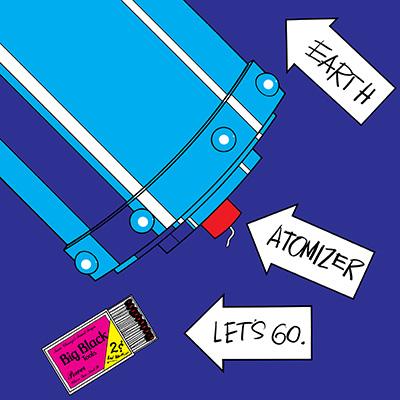
Day 0554 - Atomiser

Big Black "Atomiser" (1985)


I had heard of Big Black (especially their provocatively titled second full-length album "Songs about Fucking") but had never actually heard a note of the music.  I was also very uninformed, in that I had heard of Steve Albini but knew him solely as a producer/engineer.  I didn't realise that he was musician in bands like Big Black and Shellac (he'd also... carrying on his role as provocateur, had a band called Rapeman).

The music here is essentially proto-industrial.  It's just "three men and a drum machine".  The tinny drum machine, aggressive guitars and barked vocals could be seen as an early guidebook for acts like Nine Inch Nails, Marilyn Manson and even early Shihad.